

Last updated: August 25, 2026
For over a decade, Mozilla's Pocket was the default "read-it-later" app for millions. But as the digital landscape evolves, so do our needs. We no longer just save long-form articles; we save X threads, TikTok videos, startup pricing pages, GitHub repositories, and Google Docs.
If you are a "Pocket refugee" looking for a modern replacement, the best Pocket alternatives in 2026 go beyond just extracting article text. They act as a universal capture system for the entire internet.
What this post covers: Why the traditional read-it-later model is breaking, the timeline of how we got here, and a detailed comparison of the top alternatives to help you choose your next link organizer.
Table of Contents
The Shift from Reading to Organizing
Pocket was built for an era where the web was primarily text-based articles. Its core superpower was stripping away ads and sidebars to give you a clean reading view.
Today, the things we want to save are fundamentally different. When you save a Figma prototype, a YouTube tutorial, or a SaaS dashboard, a "clean reading view" is useless. What you actually need is a fast, searchable, and visually organized repository. You need a link organizer, not just a reading app.
Pocket's Evolution & Timeline
Understanding why so many users are migrating requires looking at how the tool and the web have changed.
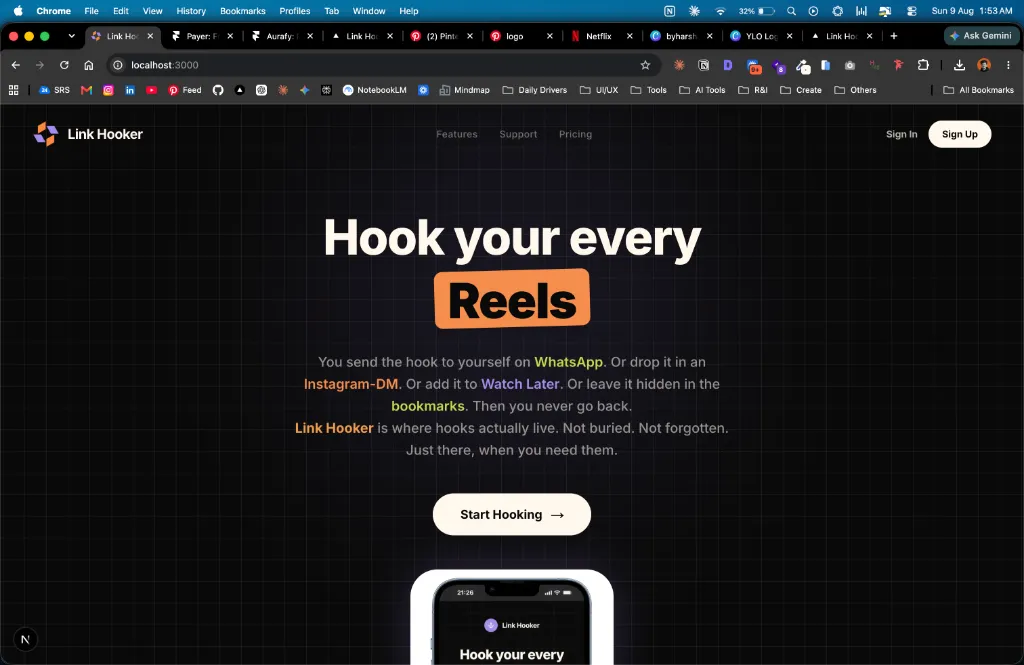 A look back at how read-it-later apps evolved from offline article readers to universal web clippers.
While Pocket remains a great tool for long-form reading, users who save diverse content types often find their saved lists turning into a graveyard of broken previews and unreadable dynamic content.
Comparing the Best Pocket Alternatives in 2026
To help you decide where to migrate, here is a detailed breakdown of the top contenders.
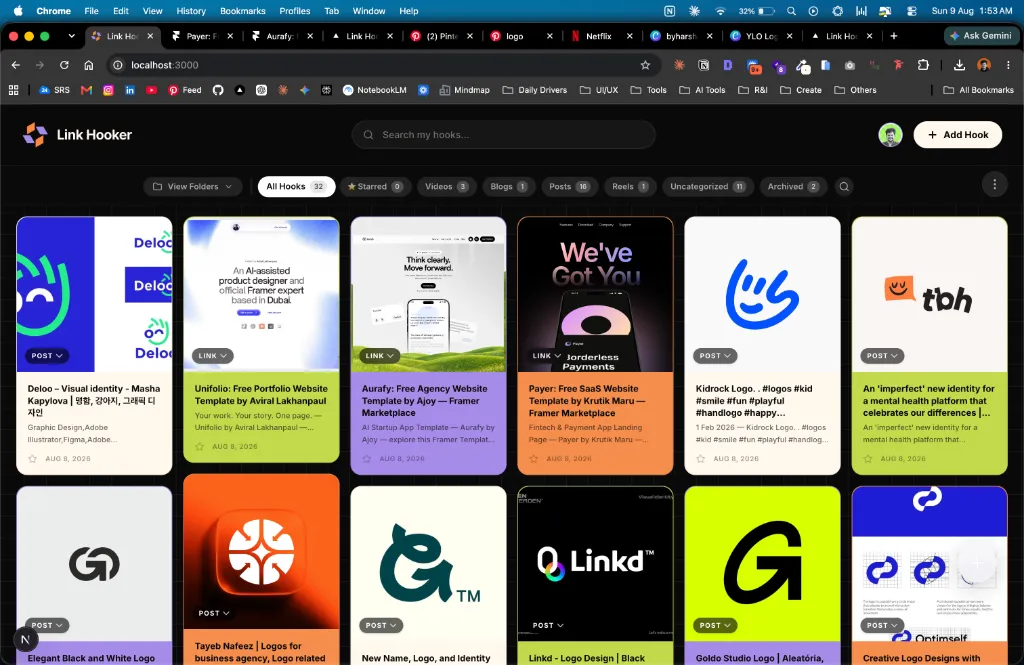 Visualizing the differences between the top bookmarking and link organization tools on the market today.
| Feature | Link Hooker | Raindrop.io | Instapaper | |
|---|---|---|---|---|
| Core Focus | Read-it-later articles | Universal Link Organizer | Visual bookmarking | Minimalist reading |
| Full-Text Search | Premium only | Yes (Free & Pro) | Premium only | Premium only |
| Dynamic Content Support | Poor | Excellent | Good | Poor |
| Personal Notes | No | Yes (At capture) | Yes | Highlights only |
| Task Management | No | Built-in (Deadlines, NLP) | No | No |
Alternative 1: Link Hooker
If you are migrating away from Pocket because you need to save everything-not just articles-Link Hooker is designed exactly for this use case.
Link Hooker does not try to reformat the web into a reading view. Instead, it acts as a high-speed capture and retrieval system for URLs. When you save a link, it automatically fetches the rich preview (OG Image), title, and description. Crucially, it allows you to add personal notes at the exact moment of capture.
Why it's a great Pocket alternative:
- Search that actually works: Link Hooker's search indexes your notes alongside the page metadata, so you can find things based on why you saved them.
- Visual organization: The grid view makes it incredibly easy to scan your saved links.
- Built for scale: Whether you are on the generous free tier or upgrade to Pro, it handles hundreds of links without slowing down.
You can check out the full capabilities on the features page, or view the pricing options to see how the Pro tiers compare to Pocket Premium.
Alternative 2: Raindrop.io
Raindrop.io is a powerhouse for visual bookmarking. If you are a designer, developer, or researcher who heavily relies on nested folders, tags, and custom icons, Raindrop is a fantastic, mature product.
Where it excels:
- Deep organizational structures (nested folders).
- Support for uploading actual files alongside links.
Where it differs: Raindrop can sometimes feel overwhelming due to the sheer number of organizational features. If you suffer from "tag fatigue" (spending more time organizing than saving/retrieving), Link Hooker's simpler Folder + Note + Search approach might be a better fit.
Alternative 3: Instapaper
If you still primarily want a pure read-it-later experience for text-heavy articles, Instapaper remains the gold standard. It has barely changed its minimalist aesthetic in years, and that is exactly why its users love it.
Where it excels:
- Unbeatable typography and reading experience.
- Great highlighting features.
Where it differs: Like Pocket, Instapaper will struggle with modern web apps, dashboards, video links, or social media threads.
Replacement Checklist
Before you export your data and commit to a new platform, use this checklist to ensure you are picking the right tool for your specific workflow.
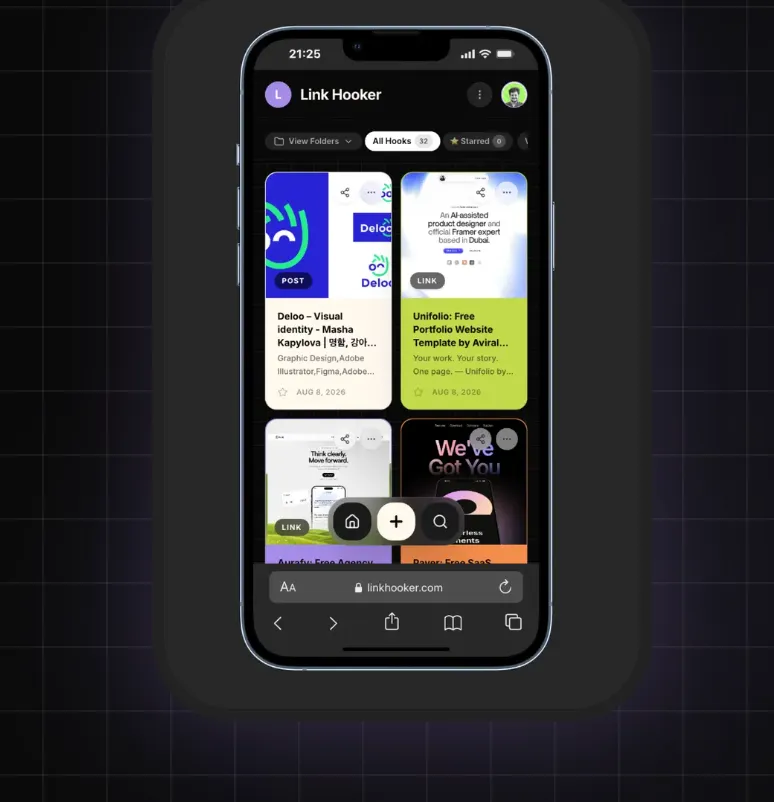 Ensure your new tool supports your specific workflow before fully migrating.
- Audit your saves: Are you mostly saving articles to read on a Sunday morning, or are you saving tools, references, and videos?
- Test the search: Export 50 of your recent Pocket saves, import them into your chosen alternative, and try searching for them a week later.
- Check the capture friction: Can you save a link in less than 3 seconds on both mobile and desktop?
- Evaluate the pricing: Compare the long-term costs of the premium tiers (see our pricing for reference).
Frequently Asked Questions
Can I export my data from Pocket to a new tool? ▼
Is a read-it-later app the same as a bookmark manager? ▼
What makes Link Hooker a good Pocket alternative? ▼


Harshal Saraf
Founder, Link Hooker
Harshal built Link Hooker after realizing traditional read-it-later apps couldn't handle the modern internet. From Figma files to GitHub repos, the things we save have changed, and we need a universal capture tool built to handle them all. Hook it before you lose it.